Class K Fire Extinguishers: A Complete Guide
Class K fire extinguishers are specialized wet-chemical units designed specifically for fires involving cooking oils and fats in commercial kitchens. Unlike standard ABC extinguishers, these units use a unique chemical reaction to safely suppress and prevent re-ignition of high-temperature grease fires. Understanding what Class K fire extinguishers are, when they’re required, and how to use them properly is necessary for any facility with commercial cooking equipment.
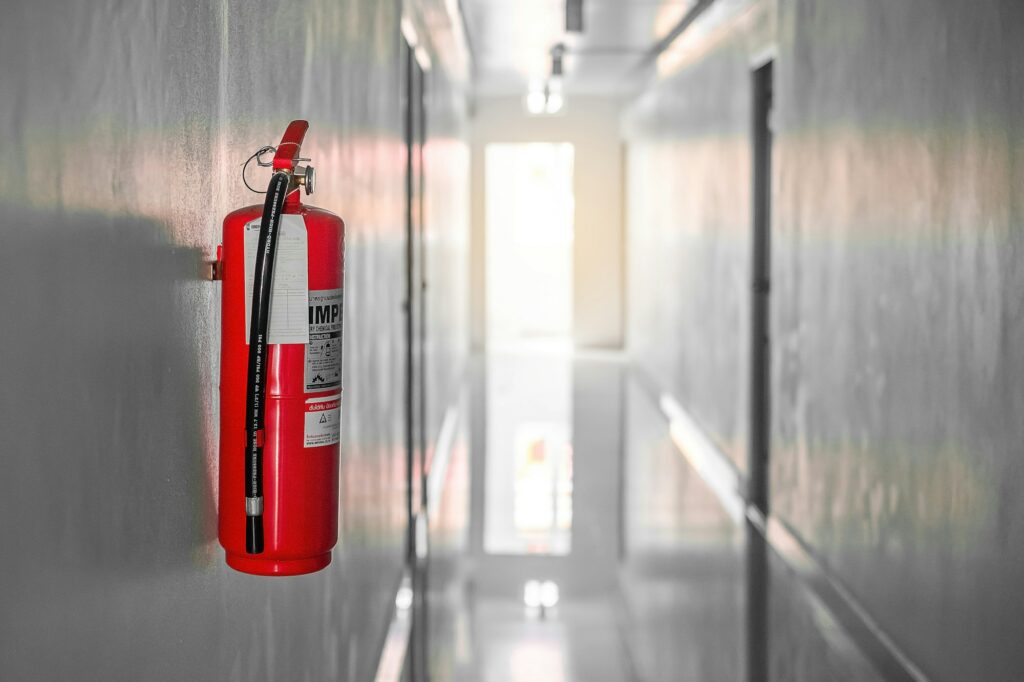
What Is a Class K Fire Extinguisher
A portable Class K fire extinguisher is designed to extinguish fires involving animal fats or cooking oils in cooking appliances, as defined by NFPA 10 (the National Fire Protection Association’s standard for portable fire extinguishers). These specialized units were introduced as a separate classification in the 1990s after the restaurant industry shifted from animal fats to vegetable oils, which have higher auto-ignition temperatures—often exceeding 700°F compared to 650°F for lard-based fats.
To understand why Class K fire extinguishers exist, it helps to know the basic fire classification system. Class A covers ordinary combustibles like wood and paper, Class B handles flammable liquids such as gasoline, Class C addresses energized electrical equipment, and Class D is for combustible metals. Class K was created specifically for combustible cooking media—the vegetable oils and animal fats used in commercial kitchens.
Traditional dry chemical extinguishers can’t safely handle modern grease fires. They lack the cooling properties needed to prevent re-ignition and can actually cause dangerous splashing that spreads burning oil across the kitchen. We’ve seen situations where using the wrong extinguisher type turned a contained fryer fire into a kitchen-wide emergency.
You’ll find Class K extinguishers required by code in restaurants, institutional cafeterias, hotel kitchens, school dining halls, and any facility with deep fryers or large-scale cooking equipment. Local fire marshals typically enforce these requirements during annual inspections and before issuing occupancy permits for new establishments.
How Class K Wet-Chemical Extinguishers Work
Class K fire extinguishers use a potassium-based wet-chemical extinguishing agent that fights grease fires through two critical mechanisms: saponification and cooling. Understanding this process helps explain why these units outperform other extinguisher types on cooking oil fires.
When you discharge a Class K fire extinguisher, the agent comes out as a fine mist or spray rather than a forceful stream. This low-velocity discharge minimizes the risk of splashing hot oil and spreading the fire—a design feature developed after field testing showed that high-pressure discharge patterns actually worsened grease fires by propelling burning oil across work surfaces.
Saponification Foam Barrier
Saponification is a chemical reaction where the alkaline wet chemical reacts with hot cooking oils to create a thick, foam-like barrier—essentially turning the surface of the burning oil into soap. This soapy layer separates the burning oil from oxygen, seals in dangerous vapors, and prevents re-ignition by maintaining a protective blanket over the fuel source. The foam layer must remain undisturbed for at least 20-30 minutes while the oil cools below its flash point. If you disturb this barrier too early, the still-hot oil underneath will re-ignite immediately.
Cooling The Cooking Oil
The wet-chemical agent also provides significant cooling to both the oil and the cooking appliance itself. This lowers the oil temperature below its auto-ignition point—the temperature at which it spontaneously re-ignites even without a visible flame. Without adequate cooling, the oil will re-flash within seconds of extinguishing the visible flames, creating a dangerous cycle. This cooling effect is what separates Class K fire extinguishers from dry chemical units, which can’t reduce oil temperatures enough to prevent re-ignition.
Potassium-Based Extinguishing Agent Types
Class K fire extinguishers typically use one of three potassium compounds as their extinguishing agent: potassium acetate, potassium citrate, or potassium carbonate. All three are alkaline chemicals that react effectively with cooking oils to create the saponification barrier. Potassium acetate is the most common formulation because it provides excellent cooling properties and creates a stable foam layer. Potassium citrate and potassium carbonate work similarly but may have slightly different discharge characteristics or foam stability. Regardless of which compound your extinguisher uses, all potassium-based agents are specifically engineered to handle the high auto-ignition temperatures of modern vegetable cooking oils.
When Class K Extinguishers Are Required by Code
NFPA 10 and NFPA 96 (the standard for ventilation control and fire protection of commercial cooking operations) require Class K fire extinguishers wherever there’s potential for fires involving combustible cooking media. These codes establish a two-tier protection system: automatic wet-chemical hood suppression systems provide primary protection, while portable Class K extinguishers serve as critical backup.
Specifically, NFPA 10 section 6.6.1 mandates Class K fire extinguishers for any hazard where fires involving vegetable or animal oils and fats could occur. The International Fire Code section 906.4.2 requires at least one six-liter Class K extinguisher for every four deep fat fryers or for fryers exceeding six square feet of cooking surface. Local fire codes in Memphis and surrounding areas typically adopt these national standards with minor modifications.
Codes also require that ABC dry chemical extinguishers be removed from the immediate cooking area because they can interfere with wet-chemical hood suppression systems and potentially worsen grease fires. We’ve worked with facility managers who weren’t aware of this requirement and had violations cited during inspections—it’s a common oversight that’s easily corrected with proper planning.
Class K Fire Extinguisher Placement Rules
Proper placement isn’t just about code compliance—it’s about ensuring your staff can quickly access the extinguisher during an emergency without entering a dangerous area. NFPA 10 and the International Fire Code establish specific requirements for travel distance, visibility, and accessibility in commercial kitchens to maximize safety and response effectiveness.
30-Foot Maximum Travel Distance
NFPA 10 section 6.6.2 requires Class K fire extinguishers to be located within a maximum travel distance of 30 feet from the cooking appliances. This measurement is critical: it’s calculated as the actual walking path an employee would take to reach the extinguisher, not a straight line through equipment or walls. The 30-foot rule ensures that kitchen staff can retrieve the extinguisher within seconds during a grease fire emergency—when every moment counts. In a fast-moving grease fire, delays of even 15-20 seconds can mean the difference between a contained appliance fire and flames spreading to the hood, walls, or ceiling. This shorter travel distance (compared to the 75-foot requirement for Class A extinguishers) reflects the rapid escalation potential of cooking oil fires.
Hood System Placard Requirement
NFPA 10 section 5.5.4.5.3 mandates that you install a placard near each Class K fire extinguisher stating that the fixed fire protection system must be activated before using the portable extinguisher. This placard serves as a critical reminder during high-stress emergencies when staff may forget proper procedures. The automatic hood suppression system provides primary protection and must discharge first—the portable Class K extinguisher is only for backup to handle fires that spread beyond the hood coverage or flames that persist after the automatic system discharges. The placard typically reads something like: “Activate hood suppression system before using this extinguisher.” This simple instruction prevents the common mistake of grabbing the portable unit first while the more powerful automatic system remains inactive.
Quantity Guidelines Per Fryer Surface Area
The International Fire Code section 906.4.2 provides specific guidance on how many Class K fire extinguishers you need based on your cooking equipment. The code requires at least one six-liter (1.6-gallon) Class K extinguisher for every four deep-fat fryers, or for fryers exceeding six square feet of total cooking surface area. For example, if your kitchen has six standard commercial fryers, you’ll need at least two Class K extinguishers. If you have a single large fryer bank with eight square feet of oil surface, you’ll need two extinguishers, even though it’s technically one piece of equipment. In our experience installing fire protection systems throughout the Memphis area, we’ve found that mounting extinguishers near the kitchen exit (but within the 30-foot requirement) gives staff the best chance to fight the fire while maintaining a clear escape route. This placement also prevents the extinguisher from being damaged by kitchen traffic or heat exposure from cooking equipment.
Choosing The Right Class K Extinguisher For Your Kitchen
Selecting the appropriate Class K extinguisher isn’t a one-size-fits-all decision. The right unit for your kitchen depends on several factors: the total cooking surface area, the types of appliances you operate, your facility’s specific hazards, and local code requirements. Understanding these variables ensures you’re not just meeting minimum compliance standards but actually providing effective fire protection for your specific operation.
Start by evaluating your cooking equipment. Count your deep fryers, griddles, ranges, and any other appliances that use cooking oils or fats. Measure the total square footage of cooking surfaces that contain oil—this directly impacts how many extinguishers you’ll need and what capacity they should be. A small café with two fryers has vastly different requirements than a high-volume restaurant with six fryers, multiple woks, and large griddles.
Consider your kitchen layout and workflow patterns. Extinguishers need to be accessible within 30 feet of any cooking appliance, but they also need to be positioned where staff can reach them without crossing through the fire zone. We’ve designed protection systems for kitchens where the equipment layout required three smaller extinguishers instead of two larger ones simply to maintain proper coverage and safe access points.
Common Six-Liter Models
Six-liter (1.6-gallon) Class K extinguishers have become the industry standard for commercial kitchens, and there’s good reason for their widespread adoption. These units strike the optimal balance between fire suppression capacity, portability, and code compliance for most cooking operations.
A six-liter extinguisher provides approximately 40-50 seconds of continuous discharge time—enough to build an effective foam blanket over a standard commercial fryer (roughly 15-18 inches by 18-24 inches of oil surface). This capacity handles the typical grease fire scenario: a single appliance with flames contained to the cooking surface. The discharge range of six to eight feet allows the operator to maintain a safe distance while still effectively applying the agent.
These units typically weigh between 25-30 pounds when fully charged, making them manageable for most kitchen staff to lift and operate during an emergency. Larger units (like 9-liter or 12-liter models) provide extended discharge time but become significantly heavier and more difficult to maneuver in tight kitchen spaces—a practical consideration that matters during high-stress emergencies.
From a code compliance perspective, the International Fire Code’s requirement of one extinguisher per four fryers or per six square feet of cooking surface is based on six-liter capacity. If you choose smaller units, you’ll need more of them to meet the same coverage requirements. We typically recommend six-liter models for restaurants, institutional kitchens, and any facility with standard commercial cooking equipment.
UL Listings And Ratings
UL (Underwriters Laboratories) and FM Global (Factory Mutual) are independent testing organizations that evaluate fire extinguishers for safety and performance. When you see a UL or FM listing on an extinguisher, it means the unit has been rigorously tested and meets specific performance standards—it’s not just a manufacturer’s claim.
For Class K fire extinguishers, UL Standard 711 establishes the testing protocol. Extinguishers must demonstrate they can extinguish test fires involving vegetable oil heated to specific temperatures and prevent re-ignition for a defined period. Units that pass receive a UL classification mark, typically displayed on the extinguisher’s label along with the model number and capacity.
These listings matter for several critical reasons. First, NFPA 10 section 4.1.1 requires that portable fire extinguishers be listed and labeled by an approved testing laboratory—meaning your local fire marshal won’t accept unlisted units during inspections. Second, your insurance company’s fire protection requirements almost certainly specify UL or FM-listed equipment. We’ve seen insurance claims denied because the facility used non-listed extinguishers. Third, listed extinguishers have been independently verified to work as advertised—you’re not relying solely on manufacturer specifications.
To verify a listing, check the extinguisher’s label for the UL or FM mark, usually found near the operating instructions. You can also search the UL Product iQ database online using the model number to confirm the listing is current and valid. During our installation and service work, we only provide UL-listed Class K fire extinguishers from established manufacturers—it’s a non-negotiable standard for professional fire protection.
Compatibility With Solid-Fuel Appliances
If your kitchen operates wood-fired pizza ovens, charcoal grills, or other solid-fuel cooking equipment, you face a dual hazard: both grease fires (Class K) and ordinary combustible fires (Class A). Standard Class K fire extinguishers are formulated specifically for liquid cooking media and aren’t rated for wood or charcoal fires. This is where dual-rated Class A:K extinguishers become necessary.
Class A:K extinguishers use a wet-chemical agent that’s been tested and listed for both ordinary combustibles and cooking oil fires. These units can handle a wood fire in your pizza oven and a grease fire in your fryer with the same extinguishing agent. The wet-chemical formulation provides the cooling and penetration needed for Class A materials while still creating the saponification barrier required for cooking oils.
NFPA 10 doesn’t explicitly require dual-rated units, but it does require that you have appropriate extinguishers for all fire hazards present in your facility. If you have solid-fuel equipment, you need Class A protection. Rather than mounting separate Class A and Class K extinguishers (which takes up valuable wall space and creates confusion during emergencies), a single Class A:K unit provides comprehensive coverage.
We typically recommend Class A:K extinguishers for pizzerias, steakhouses with wood-fired grills, barbecue restaurants, and any kitchen where solid fuel is part of the cooking process. The units are slightly more expensive than standard Class K fire extinguishers, but the operational simplicity and space savings justify the cost. Your staff only needs to learn one extinguisher type, and you reduce the risk of someone grabbing the wrong unit during an emergency.
One important note: even with Class A:K extinguishers, you still need to follow the same placement rules, maintenance schedules, and integration requirements with your hood suppression system. The dual rating doesn’t change any of the fundamental code requirements—it simply expands the range of fires the extinguisher can handle.
Class K Fire Extinguisher For Food Truck Owners
Food truck operators face unique fire protection challenges that stationary restaurants don’t encounter. Your mobile kitchen operates in a confined space with limited wall area, travels to different jurisdictions with varying inspection requirements, and must maintain fire safety equipment despite constant vibration and movement. Understanding these specific requirements ensures you’re compliant wherever you operate and protected against the very real grease fire hazards in your compact cooking environment.
Most jurisdictions require food trucks to carry at least one Class K extinguisher if you’re cooking with oils or operating deep fryers, which covers nearly every mobile food operation. The standard six-liter Class K fire extinguisher is typically sufficient for food truck applications, but placement becomes critical in tight quarters. You need the extinguisher accessible within seconds but positioned where it won’t be damaged by heat, knocked loose during transport, or blocked by equipment or staff during service.
We recommend mounting your Class K fire extinguisher near the service window or exit door—never behind cooking equipment where you’d have to reach through flames to access it. Use heavy-duty vehicle-rated mounting brackets that can withstand road vibration and sudden stops. Standard wall brackets designed for stationary buildings often fail in mobile applications, leaving your extinguisher on the floor when you need it most.
Fire marshal inspections for food trucks vary significantly by location. Some jurisdictions inspect annually as part of your mobile food vendor permit renewal, while others conduct random inspections at events or operating locations. Memphis and Shelby County health departments typically verify fire extinguisher presence and condition during routine health inspections, but dedicated fire marshal inspections may occur separately. Keep your inspection tags current and maintenance documentation accessible—inspectors can shut down your operation immediately if your fire protection equipment isn’t compliant.
Many food truck owners ask whether they need a hood suppression system like that of brick-and-mortar restaurants. The answer depends on your cooking equipment and local codes. If you’re operating Type I hood systems (those covering grease-producing appliances), most jurisdictions require automatic suppression systems with manual pull stations. However, some mobile food codes allow Class K extinguishers as primary protection for smaller operations without hood systems. Check with your local fire marshal before assuming you’re exempt—we’ve seen food truck operators surprised by suppression system requirements during their first inspection.
Space constraints also affect your ABC extinguisher placement. While Class K fire extinguishers handle cooking oil fires, you still need ABC coverage for ordinary combustibles and electrical hazards in your truck. The same 30-foot travel distance requirement applies, but in a food truck, everything is within 30 feet. Mount your ABC extinguisher separate from cooking areas—typically near the driver’s area or entrance—to prevent interference with Class K operations and ensure you have appropriate protection for non-cooking fires.
One often-overlooked requirement: securing extinguishers during transport. Unsecured extinguishers become dangerous projectiles during accidents or sudden stops. We’ve responded to incidents where loose extinguishers caused injuries or damaged equipment during normal driving. Use DOT-approved mounting systems and verify they’re tight before every trip.
ABCDK Fire Extinguisher Myths And Facts
One of the most persistent misconceptions in commercial kitchen fire safety is the belief that you can buy a single “ABCDK” extinguisher that handles all fire types. This myth causes real compliance problems and safety gaps because facility managers think they’re fully protected when they’re actually missing critical equipment. Let’s clarify what actually exists and what doesn’t.
Myth: A single ABCDK extinguisher covers all fire classes, including cooking oils.
Fact: No such thing as an “ABCDK” extinguisher exists. Fire extinguisher classifications don’t work that way. You cannot have a single unit rated for ABC (ordinary combustibles, flammable liquids, and electrical) plus Class K (cooking oils) using the same extinguishing agent. The chemistry doesn’t allow it.
Here’s why: ABC extinguishers use monoammonium phosphate dry chemical, which works through smothering and interrupting the chemical reaction of fire. This agent is completely ineffective on cooking oil fires because it can’t provide the cooling or saponification needed to prevent re-ignition. Class K extinguishers use potassium-based wet chemicals that create a foam barrier through saponification—a process that doesn’t work on ordinary combustibles or flammable liquids the way ABC agents do.
What actually exists are Class A:K extinguishers (note the colon, not a combined “AK” rating). These dual-rated units use specialized wet-chemical agents tested and listed for both ordinary combustibles (Class A) and cooking oils (Class K). They’re designed for facilities with solid-fuel cooking equipment, such as wood-fired pizza ovens, where you have both wood-burning and grease-fire hazards. But even these units don’t cover Class B (flammable liquids) or Class C (electrical) fires.
Myth: If I have ABC extinguishers throughout my building, I don’t need Class K extinguishers in the kitchen.
Fact: ABC extinguishers are specifically prohibited in commercial cooking areas by NFPA codes. Using an ABC extinguisher on a grease fire can actually make the situation worse by disrupting the foam barrier created by your automatic hood suppression system and failing to cool the oil below its re-ignition temperature. You must have dedicated Class K fire extinguishers for cooking areas, and ABC extinguishers must be removed from the immediate vicinity of cooking equipment.
Myth: I can use my Class K fire extinguisher on any type of fire in my kitchen.
Fact: Class K fire extinguishers are formulated specifically for cooking oil fires. While they won’t harm you if used on other fire types, they’re not effective for flammable liquid spills (such as cleaning solvents), electrical panel fires, or trash fires. This is why commercial kitchens need a layered approach: Class K extinguishers near cooking equipment, ABC extinguishers in non-cooking areas for general hazards, and proper separation between the two types.
The correct approach to commercial kitchen fire protection is to install Class K fire extinguishers within 30 feet of all cooking equipment that uses oils or fats. Install ABC extinguishers in other areas of your facility (dining rooms, storage areas, offices) in accordance with the standard 75-foot travel distance requirement. If you have solid-fuel cooking equipment, consider Class A:K extinguishers for those specific areas. Never rely on a single extinguisher type to cover all hazards—it’s not how fire protection works, and it’s not what codes require.
We regularly encounter facility managers who’ve been sold on the “ABCDK” myth by unqualified vendors or who’ve misunderstood fire safety requirements. During our inspections, we identify these gaps and provide proper equipment placement in accordance with NFPA standards. If someone is trying to sell you an “ABCDK” extinguisher, they either don’t understand fire protection classifications or they’re misrepresenting what the equipment actually does. Either way, it’s a red flag that you’re not getting professional fire safety service.
Steps To Use A Class K Extinguisher On A Grease Fire
Knowing how to properly operate a Class K fire extinguisher can mean the difference between a contained incident and a catastrophic kitchen fire. The PASS method—Pull, Aim, Squeeze, Sweep—provides a simple framework that works under stress, but using it correctly on grease fires requires specific techniques that differ from fighting other fire types.
1: Pull The Pin
Locate the safety pin at the top of the extinguisher, just above the operating lever. You’ll see a plastic or metal tamper seal looped through the pin—this seal indicates the extinguisher hasn’t been used or tampered with since its last service. Break the tamper seal by pulling it away from the pin, then grasp the ring on the safety pin and pull it straight out with a firm, steady motion.
2: Aim The Nozzle Low
Point the discharge nozzle at the base of the fire—specifically at the surface of the burning oil itself, not at the flames rising above it. This is critical for Class K fire extinguishers because you’re trying to build a foam blanket directly on the oil surface. Aiming at the flames wastes agent in the air and fails to create the saponification barrier that actually extinguishes the fire.
3: Squeeze The Handle Smoothly
Apply steady, even pressure to the operating lever using a firm grip. The wet-chemical agent should discharge as a fine mist or spray, not a forceful stream. Smooth, consistent pressure maintains this optimal discharge pattern and prevents the jerky, pulsing application that can disrupt the foam layer you’re trying to build.
4: Sweep Across The Oil Surface
Move the nozzle slowly from side to side across the entire surface of the burning oil, building a uniform foam blanket that covers every inch of the cooking surface. Start at the near edge of the fire (closest to you) and work toward the far edge, using overlapping passes to ensure complete coverage. The sweeping motion should be deliberate and methodical—roughly one full sweep every two to three seconds.
Inspection And Maintenance Checklist
An extinguisher sitting on your wall isn’t worth anything if it won’t work when you need it. NFPA 10 establishes specific inspection and maintenance requirements to ensure your Class K fire extinguishers remain code-compliant and operationally ready. These aren’t suggestions—they’re mandatory requirements that fire marshals verify during inspections and that insurance companies scrutinize after incidents. Understanding what needs to be checked, when, and by whom keeps your equipment functional and your facility compliant.
Monthly Visual Inspection Points
NFPA 10, Section 7.2, requires monthly visual inspections of all portable fire extinguishers. These quick checks take less than a minute per unit and don’t require special training or tools—any responsible staff member can perform them. The goal is to verify the extinguisher is accessible, appears operational, and hasn’t been tampered with or damaged since the last inspection.
During your monthly inspection, verify these specific points for each Class K fire extinguisher:
- Location and accessibility
- Pressure gauge reading
- Pin and tamper seal
- Nozzle and hose condition
- Physical damage
- Mounting bracket security
- Inspection tag
Document each monthly inspection with the date and inspector’s initials. Most facilities use a tag hung on the extinguisher or a logbook kept in the manager’s office. This documentation proves compliance during fire marshal inspections and provides a maintenance history if problems develop. We recommend assigning monthly inspections to a specific person—such as the kitchen manager, safety coordinator, or facilities supervisor—rather than assuming someone will remember to do them.
Annual Professional Service Tasks
NFPA 10, Section 7.3, requires annual maintenance by a qualified fire protection technician. This isn’t something you can do yourself—it requires specialized training, proper tools, and certification from equipment manufacturers. Annual service goes far beyond the monthly visual checks you perform, involving internal inspection and verification that the extinguishing agent remains effective.
During annual maintenance, a certified technician performs these tasks:
- Complete disassembly and internal examination
- Agent verification and testing
- Pressure testing
- Component inspection and replacement
- External cleaning and inspection
- Service tag update
At Premier Safety, our technicians are factory-trained on all major Class K fire extinguisher brands and carry the parts needed to complete service during the initial visit—we don’t leave your facility unprotected while components arrive.
Replacement After Discharge
Any Class K extinguisher that’s been discharged—even partially—must be immediately removed from service and either professionally recharged or replaced. You cannot top off a wet-chemical extinguisher in the field, and you cannot return a partially used unit to service “temporarily” until it can be serviced. NFPA 10 section 7.4 is explicit: discharged extinguishers must be removed from service immediately.
Here’s why this matters: once you break the tamper seal and discharge any amount of agent, the extinguisher’s pressure drops, and the remaining agent may be contaminated or insufficient for effective fire suppression. A partially discharged extinguisher might look operational, but it won’t perform when needed. We’ve investigated incidents in which facilities tried to use extinguishers that had been partially discharged weeks earlier—they failed during the emergency because they lacked sufficient pressure and agent.
Class K Fire Extinguisher For Sale In Memphis And North Mississippi
If you’re operating a commercial kitchen in Memphis, Shelby County, or North Mississippi, finding the right Class K fire extinguisher isn’t just about purchasing equipment—it’s about working with a local provider who understands regional code requirements, can respond quickly for service needs, and provides professional installation that passes fire marshal inspections the first time.
Protect Your Kitchen with Premier Safety
Class K fire extinguishers are a code-required, life-saving component of commercial kitchen fire protection. They’re specifically engineered to handle the unique hazards of cooking oil fires that other extinguisher types can’t safely address.
We understand the specific challenges of commercial kitchen environments because we work in them daily. Our experience ranges from small food trucks to institutional kitchens serving thousands of meals per day. We can assess your facility’s fire protection needs, verify compliance with local codes, and design a complete fire safety program tailored to your operations.
Contact our team for a consultation on your commercial kitchen fire protection needs. We’ll schedule a site visit to evaluate your current equipment, identify any compliance gaps, and provide recommendations based on NFPA standards and local requirements.
FAQs About Class K Fire Extinguishers
Beyond the technical specifications and code requirements, facility managers and kitchen operators frequently ask practical questions about Class K fire extinguishers: cleanup after discharge, disposal procedures, costs, and operational lifespan. Here are the answers to the most common questions we receive from commercial kitchen operators throughout the Memphis area.
How Do You Clean Up After A Class K Fire Extinguisher Discharge?
Cleaning up after a Class K fire extinguisher discharge is a messy but manageable process that requires patience and the right approach. The potassium-based wet-chemical agent creates a thick, soapy foam that coats everything in the discharge area—cooking equipment, floors, walls, and any food or utensils nearby. This residue is non-toxic but slippery and requires thorough removal before you can resume kitchen operations.
Can You Dispose Of A Used Class K Fire Extinguisher Yourself?
Disposing of a Class K fire extinguisher isn’t as simple as tossing it in the dumpster—these units contain pressurized cylinders and chemical agents that require proper handling. The answer to whether you can dispose of one yourself depends on the extinguisher’s condition and your local regulations, but in most cases, professional disposal through a certified fire equipment company is the safest and most compliant approach.
What Is The Average Cost Of A Class K Fire Extinguisher?
A standard six-liter Class K fire extinguisher typically costs between $150 and $300 for the unit itself, depending on the manufacturer and specific model. Premium brands with enhanced features (like metal valve assemblies or extended warranties) fall at the higher end of this range, while economy models from lesser-known manufacturers cost less. We generally recommend mid-range units from established manufacturers like Ansul, Amerex, or Buckeye—they offer proven reliability without unnecessary premium pricing.
Are There Shipping Restrictions For Class K Wet-Chemical Fire Extinguishers?
Class K fire extinguishers are classified as hazardous materials for shipping purposes due to their pressurized cylinders and chemical contents, which means they’re subject to Department of Transportation (DOT) regulations when shipped via common carriers. Understanding these restrictions matters if you’re ordering extinguishers online or need to transport them between locations.
How Long Do Class K Fire Extinguishers Last Before Needing Replacement?
The service life of a Class K fire extinguisher depends on several factors: the quality of the unit, how well it’s maintained, environmental conditions in your kitchen, and whether it passes required inspections and tests. With proper maintenance, a quality Class K extinguisher typically lasts 10-12 years before requiring replacement, though some units may need earlier replacement due to damage, corrosion, or failed testing.
Can You Use A Class K Fire Extinguisher On Non-Cooking Fires?
Class K fire extinguishers are specifically formulated for cooking oil and fat fires, but they can technically be used on other fire types in an emergency—though they’re not the optimal choice and won’t be as effective as extinguishers designed for those specific hazards. Understanding when a Class K extinguisher will work on non-cooking fires and when it won’t helps you make informed decisions during emergencies and ensures you have appropriate backup equipment for other fire types in your facility.